Commerce OS / D2C ecommerce platform
D2C ecommerce platform

A D2C platform built for how India buys.

A mobile-first storefront and four-field checkout, with shipping, delivery, cash on delivery, GST invoicing and reporting built into the same system — hosted and maintained for you, so there are no plugins to manage and no tech team to hire.

The usual setup

A cart, ten apps, and a spreadsheet.

Data in piecesThe cart knows the payment, the courier knows the delivery, the CA knows the invoice — and nobody can answer "what did we actually earn last week?"
Plugins that driftEvery app has its own bill, its own update cycle and its own idea of an order. Something breaks after every update.
Waiting on developersSmall changes to checkout, delivery rules or invoices wait days for a freelancer.
What's included

Store to books, in one system.

Mobile-first storefront

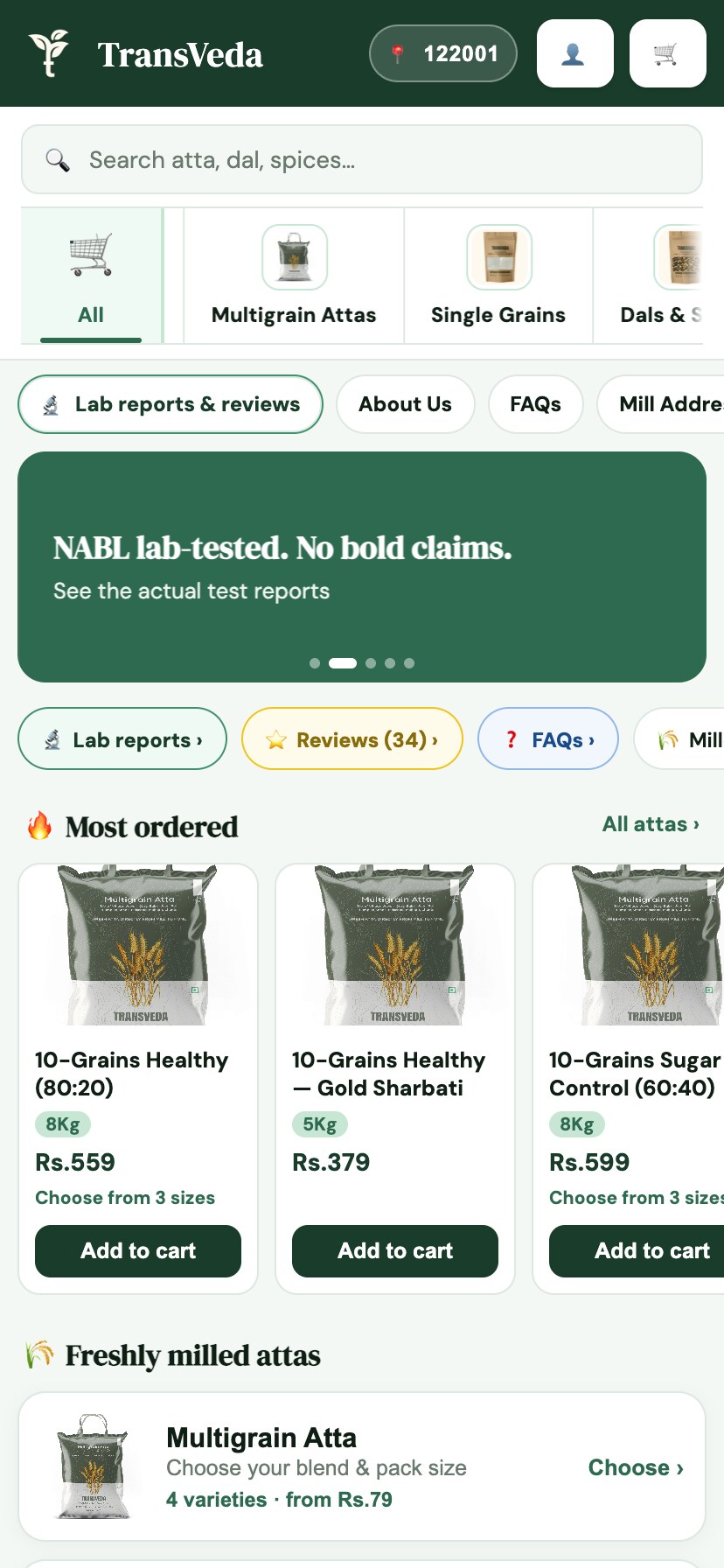
Serviceability answered first: a PIN check and delivery promise before anything goes in the cart. Regulars repeat their last basket in one tap.

Four-field checkout

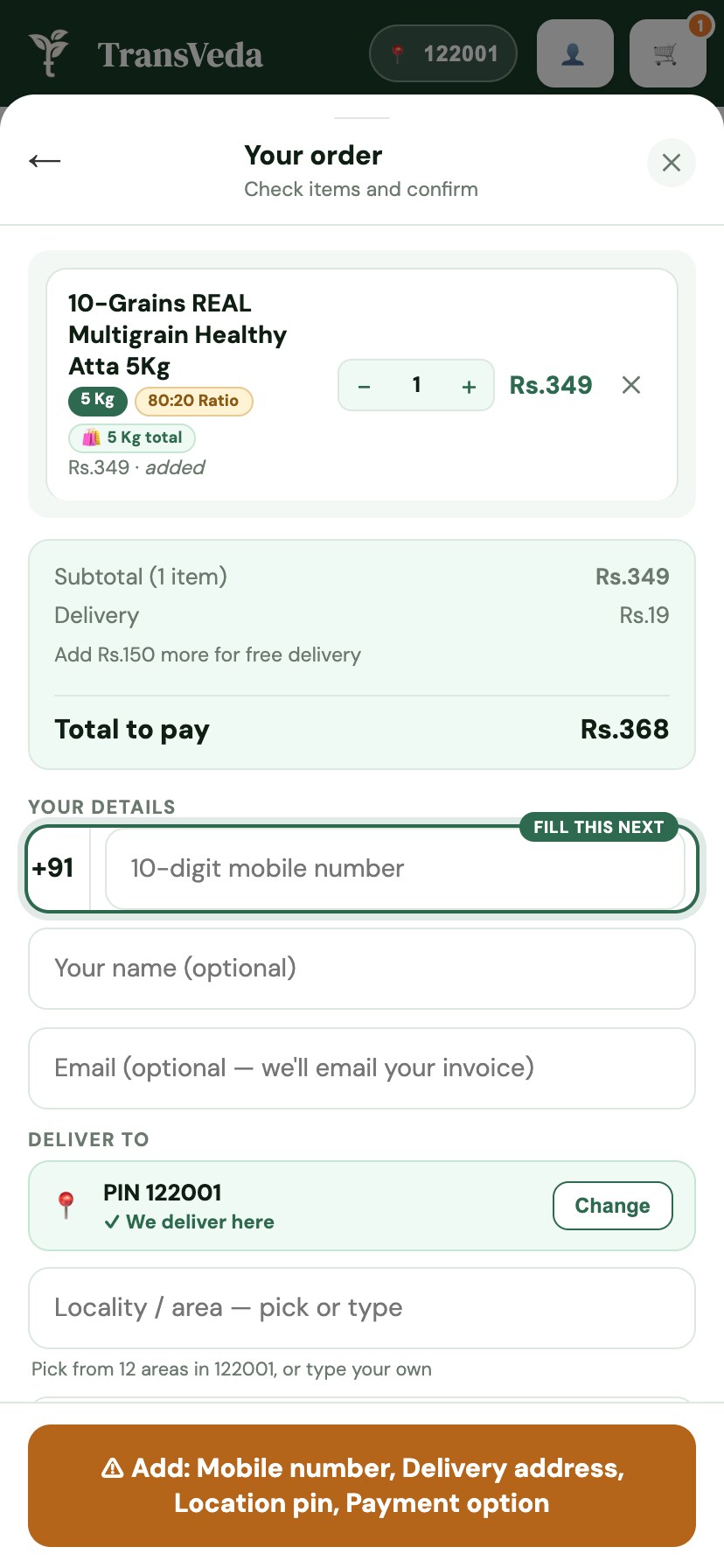
No account, no password, no page hops — address and locality resolve while the customer types.

Shipping and delivery

Your own riders on the rider app, a 3PL or hyperlocal partner, or a mix by pincode — every order moves through the same stages.

COD, GST and reports

Cash tracked from doorstep to bank, GST invoices and credit notes generated at the event, and one set of reports across all of it.

Storefront — pincode serviceability and delivery promise shown before the cart
Storefront — serviceability answered first
No tech team

We run the platform. You run the brand.

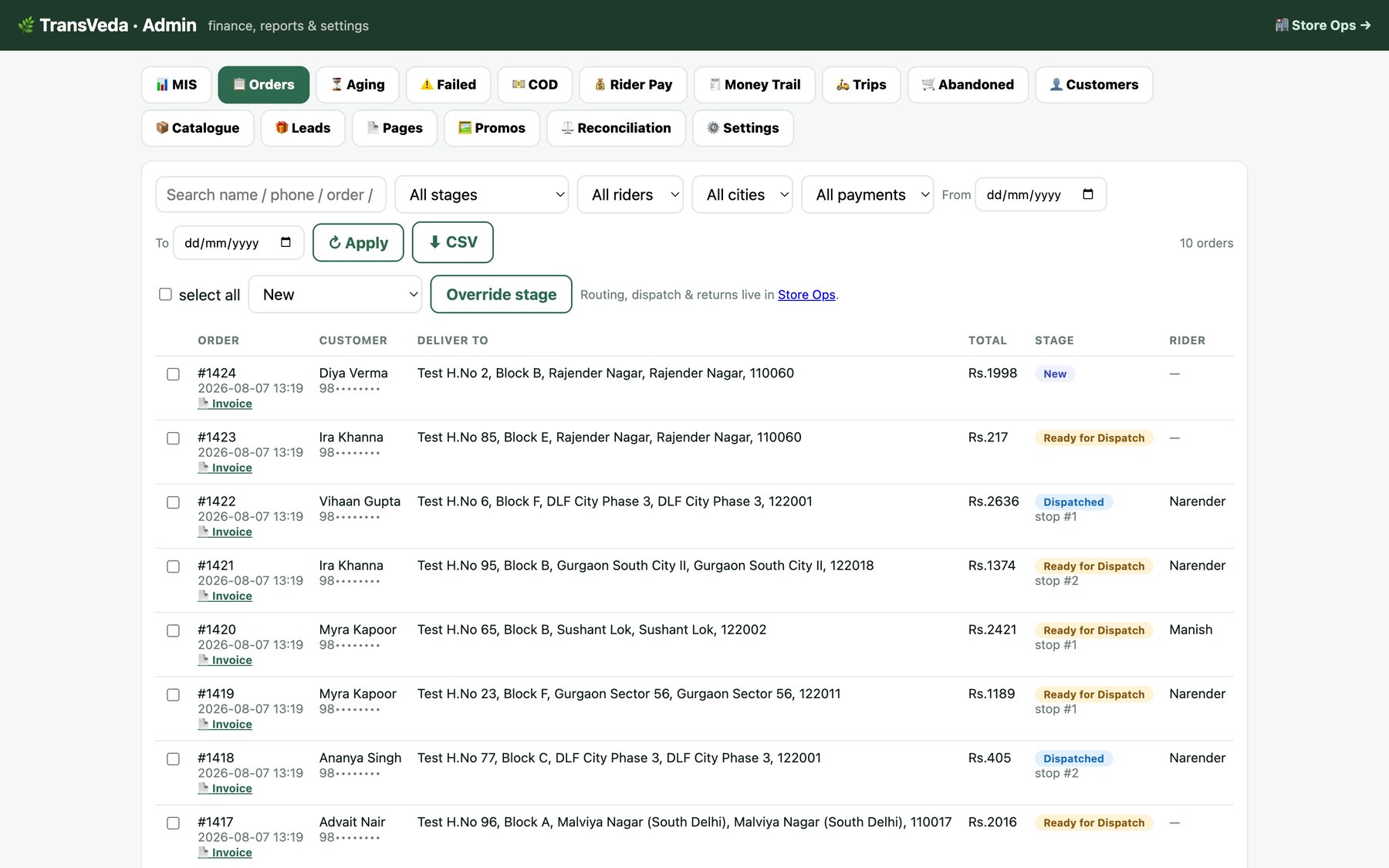
Orders screen — every order and its stage in one list
Orders — one list, every stage

Hosting, security, updates

Included. There is nothing to install, patch or keep compatible.

Integrations handled

Payments, couriers, WhatsApp and GST are connected by our team during setup.

Priced per order

Free up to 100 orders a month, then ₹6–₹10 per order. No seats, no lock-in. See pricing.

In depth

How the platform is put together.

002 The film — 9 seconds

One order, all the way through.

Basket to reconciled, and what every system is holding at each step. No cuts, no voiceover, nothing hidden between the stages.

Live render · 9 stages · cart → route → doorstep → books
003 The gap

A checkout ends where the hard part begins.

Your cart is good at taking money. It has nothing to say about the ninety minutes after — the picking, the routing, the cash, the invoice, the customer asking where it is.

01 Orders you can't fulfil A pincode you don't serve, a slot you never offered, a day you don't run.
02 Cash with no chain Collected by a rider, handed to a store, handed to the company — none of it recorded, reconciled at month end from memory.
03 Routes built by hand Stops copied into Maps each morning. No distance record, so no honest basis to pay per kilometre or to compare a partner's bill.
04 Books that disagree Cancelled orders still counted as revenue, gaps in the invoice series, credit notes raised late or never.
05 Regulars treated as strangers Number, address, landmark, pin — retyped every single time by the customer who buys the same thing every month.
06 No number you'd defend Three systems, three answers, and nothing that tells you which one is right this morning.
004 Three layers, one dataset

Not three tools bolted together.

The cart knows your delivery geography. The dispatch screen knows the invoice. The books know both. Nothing is re-keyed between them.

Layer 01 — Storefront

A cart that fits a
local catalogue

Serviceability, guided choice and a returning customer who never retypes anything.

  • PIN-gated serviceability before the first tap
  • Guided journeys — variant, grind, pack size
  • One-tap repeat order from past baskets
  • Saved profile and address book
  • COD, online, and a one-click COD rescue
  • Lab reports, reviews and FAQs in the cart
Layer 02 — Operations

Dispatch, however
you deliver

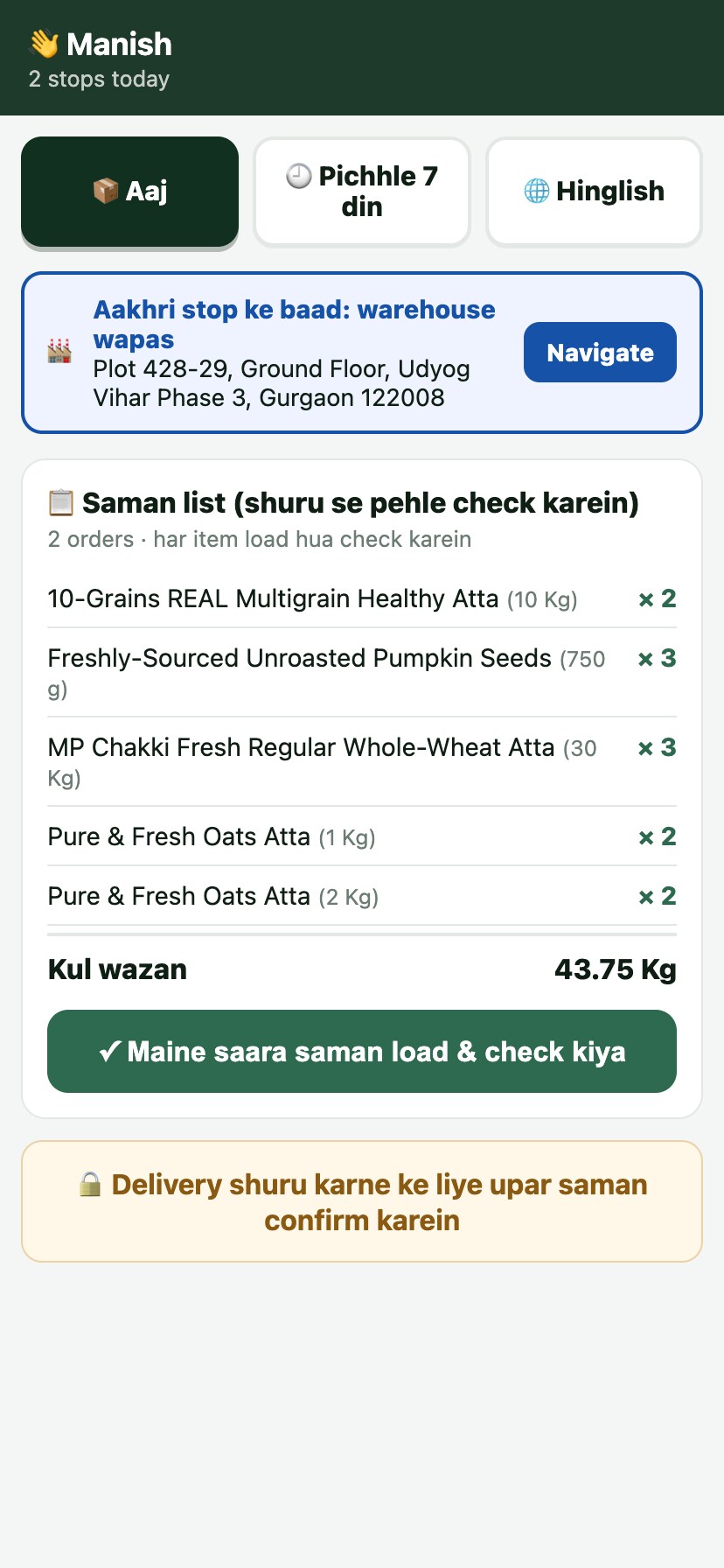
Your own riders on their phones, a delivery partner over an API, or a mix by pincode.

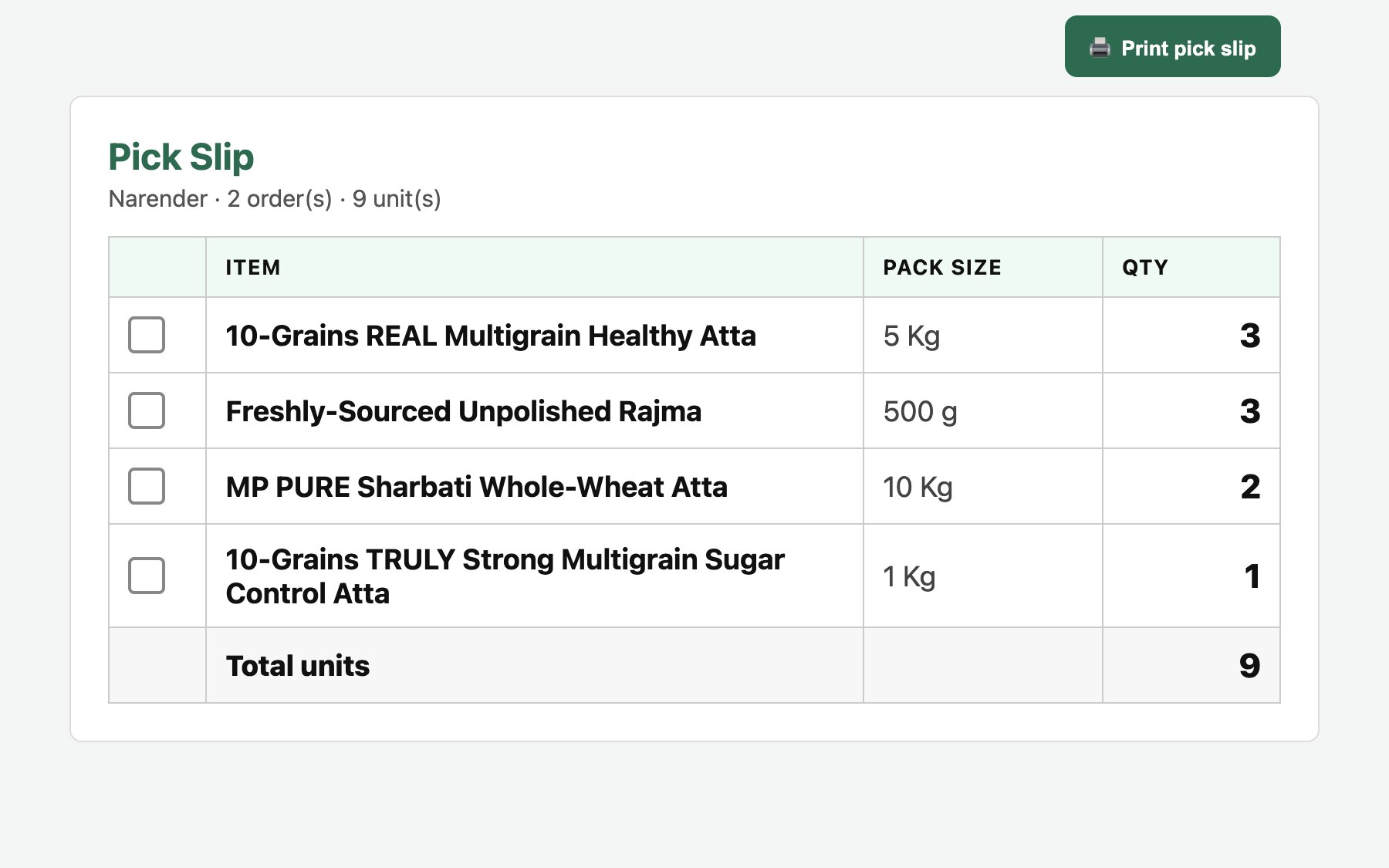
  • Pick lists, stickers and trip manifests
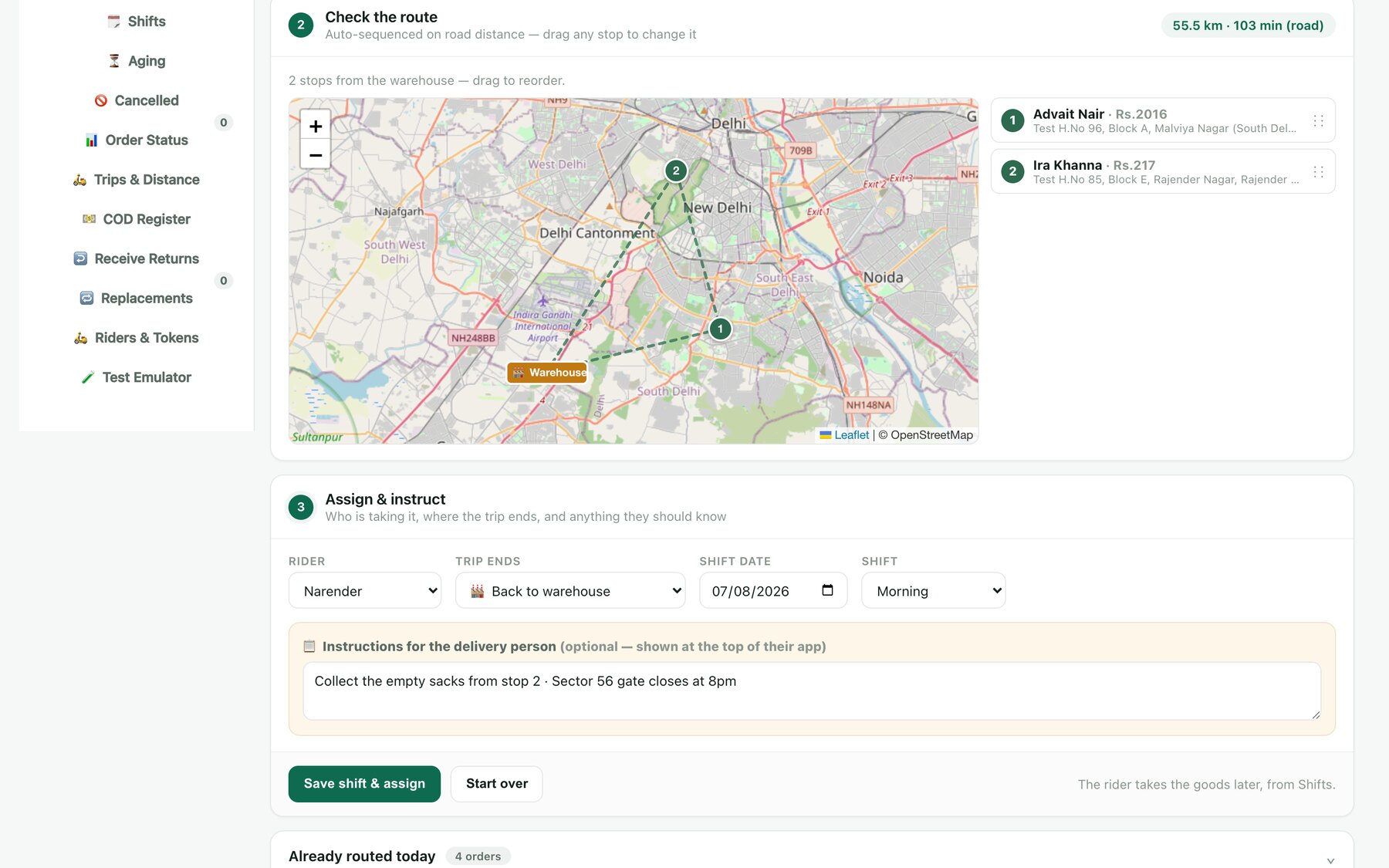
  • Route planning on real road distance
  • Rider app in English, Hinglish and Hindi
  • Hand off to a 3PL and track the same states
  • COD custody: rider → store → company
  • Doorstep capture that fixes the address for good

Delivery operations → COD reconciliation →

Layer 03 — Books

Documents an
auditor will accept

GST-correct paperwork, and a nightly check that every system still agrees.

  • Tax invoices with HSN and place of supply
  • Consecutive numbering per financial year
  • Credit notes on cancellation and return
  • Money trail: every rupee, actor and timestamp
  • Nightly reconciliation against your backend
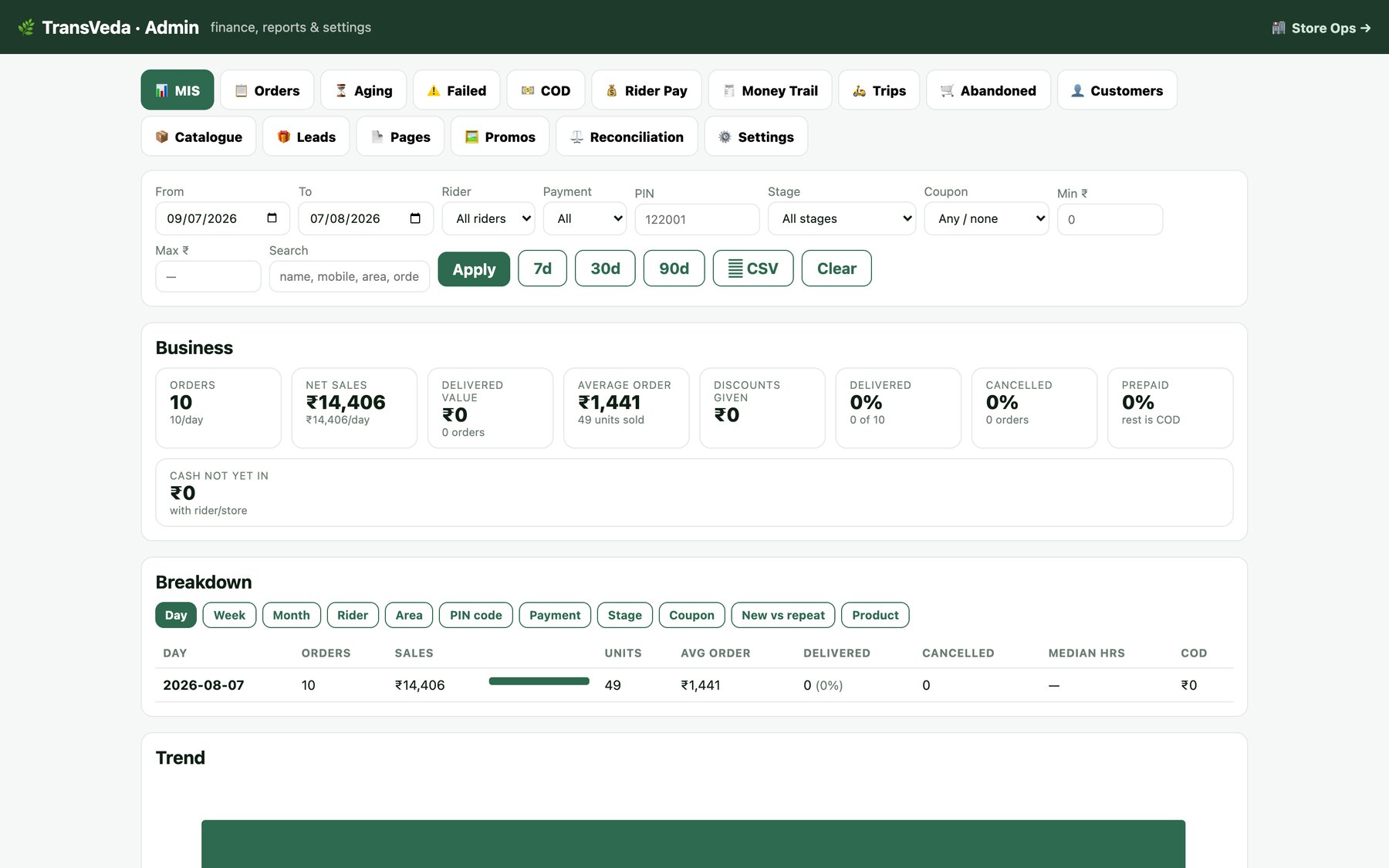
  • MIS: sales, SLAs, riders, cost per delivery

GST invoicing & credit notes →

005 Start fresh, or plug in

Run it on its own — or alongside your cart.

Run storefront, checkout, shipping, delivery and books on Commerce OS with nothing to install or maintain — or keep Shopify, WooCommerce or a custom cart and connect it as an integration — catalogue and orders sync, and fulfilment goes to whoever is actually carrying the box.

Commerce backends

Read the catalogue, write the orders, keep one record of truth — wherever that record lives.

Shopify — live WooCommerce Magento Custom / headless Standalone

Shopify is in production today. The others connect through the same adapter interface — catalogue in, orders out, money reconciled. Running without any backend is supported too: the platform can hold the catalogue itself.

Fulfilment

Own fleet, contracted riders or a national partner — the same order states either way.

Own fleet — live 3PL / courier partners Hyperlocal on-demand Dark store / pickup Mixed by pincode

The in-house rider app is in production. Partner integrations use the same manifest and status model, so an order handed to a courier reports against the same SLA board as one on your own bike.

006 The value, in one line

Frictionless ordering is
a revenue decision.

Every field, tap and page a customer has to get through is a place the order dies. We removed them — and the repeat order, which is where a grocery or wellness brand actually makes its money, collapsed to a single tap.

01

One tap to reorder

A returning customer is recognised on arrival. Their last baskets are already on screen — select, confirm, done. No login, no password, no re-typing an address they gave you last month.

Typical repeat journey: 1 tap vs 8–14 on a standard cart
02

Four fields for a stranger

Mobile, name, address, locality — on one screen, with the PIN already answered and the delivery pin resolved from the address while they type. No account creation, ever.

Checkout: one screen, no account wall
03

The promise before the basket

Serviceability, delivery day and the free-delivery threshold are settled before the first add-to-cart — so nobody fills a basket only to be told you don't deliver there.

Abandonment moved upstream, where it costs nothing
04

Ordering by voice

“Do teen kilo aata bhej do” — spoken in Hindi, Hinglish or English, into a basket. For the customer who will never enjoy typing on a phone, and for the repeat order that should take five seconds.

Reaches the cohort a typed cart quietly loses
Designed against one measure: the fewest possible actions between wanting the order and placing it. Put it in front of your own cohorts — first-time buyers, regulars, the over-fifties, the ones who order for the household — and compare it to the cart you run today.
007 The screens — twelve, unretouched

Not a mockup. The product, running.

Every frame below is a screenshot of a live deployment taking real orders — customer names and numbers masked, nothing else touched. Storefront to courier to ledger.

Storefront — Serviceability answered first
Checkout — Four fields, one screen
Courier app — Built for a phone in one hand
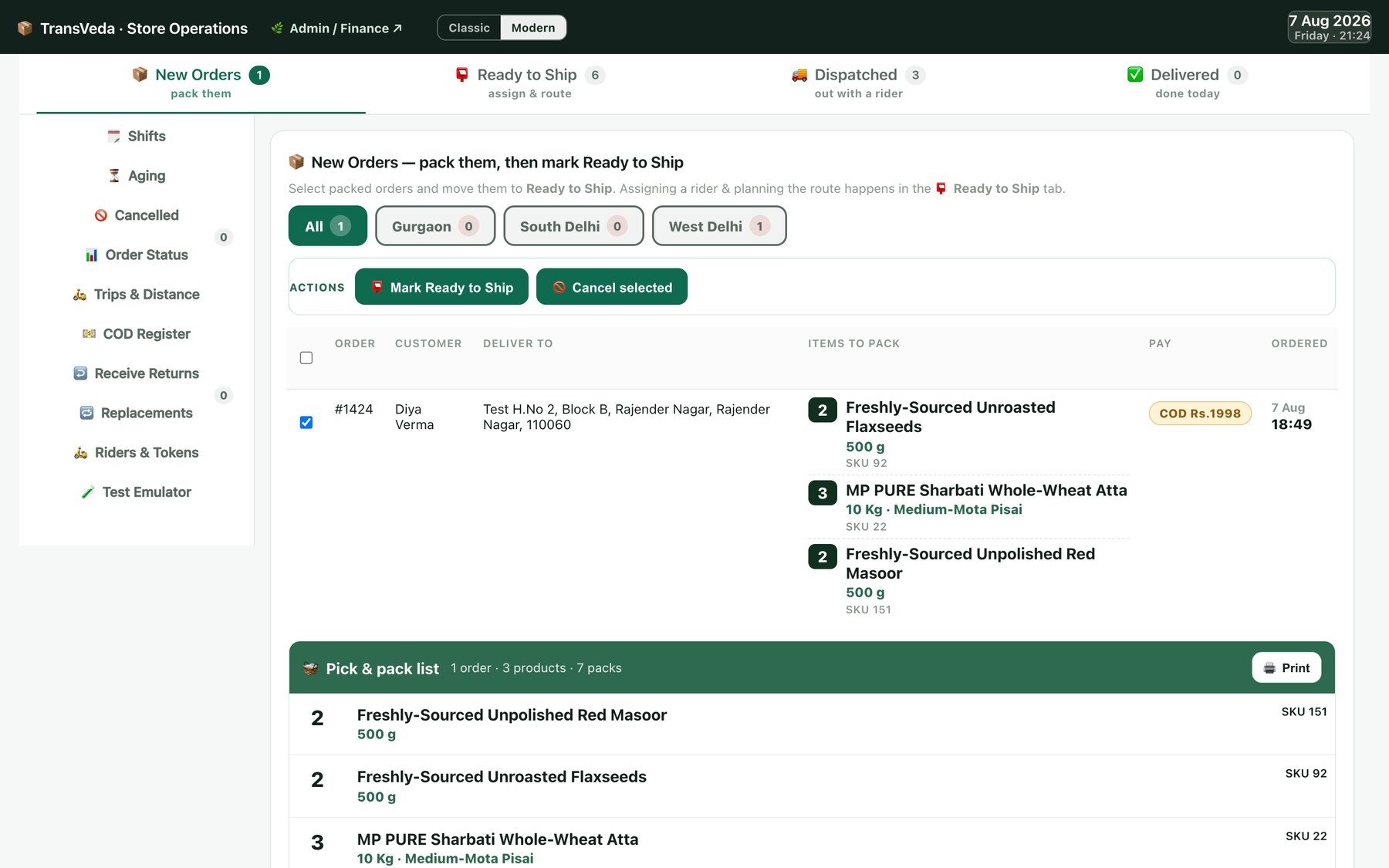
New orders — A pick list, not a spreadsheet
Route planning — Stops sequenced on real roads
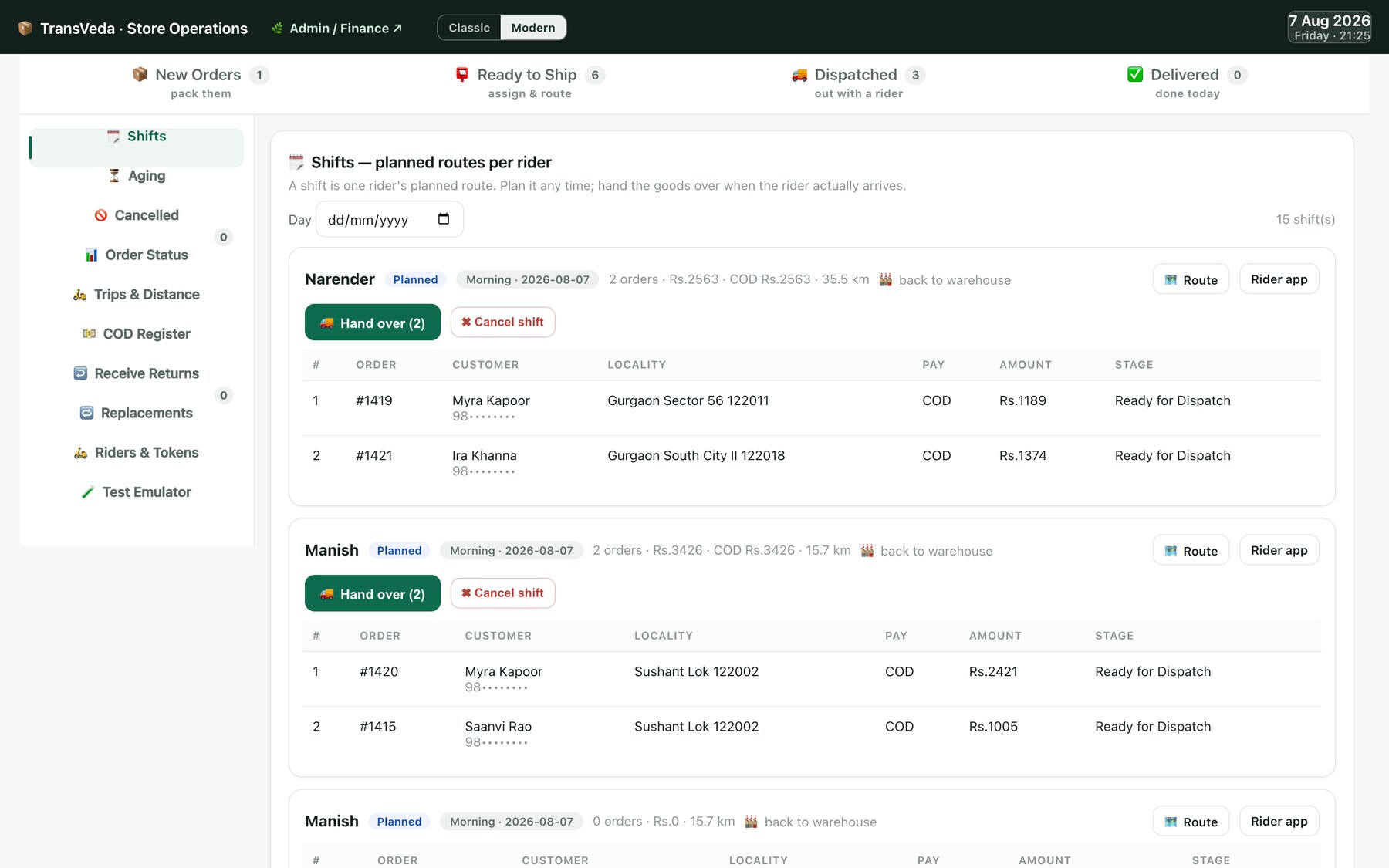
Shifts — Planned now, handed over later
Pick slip — One sheet for the whole trip
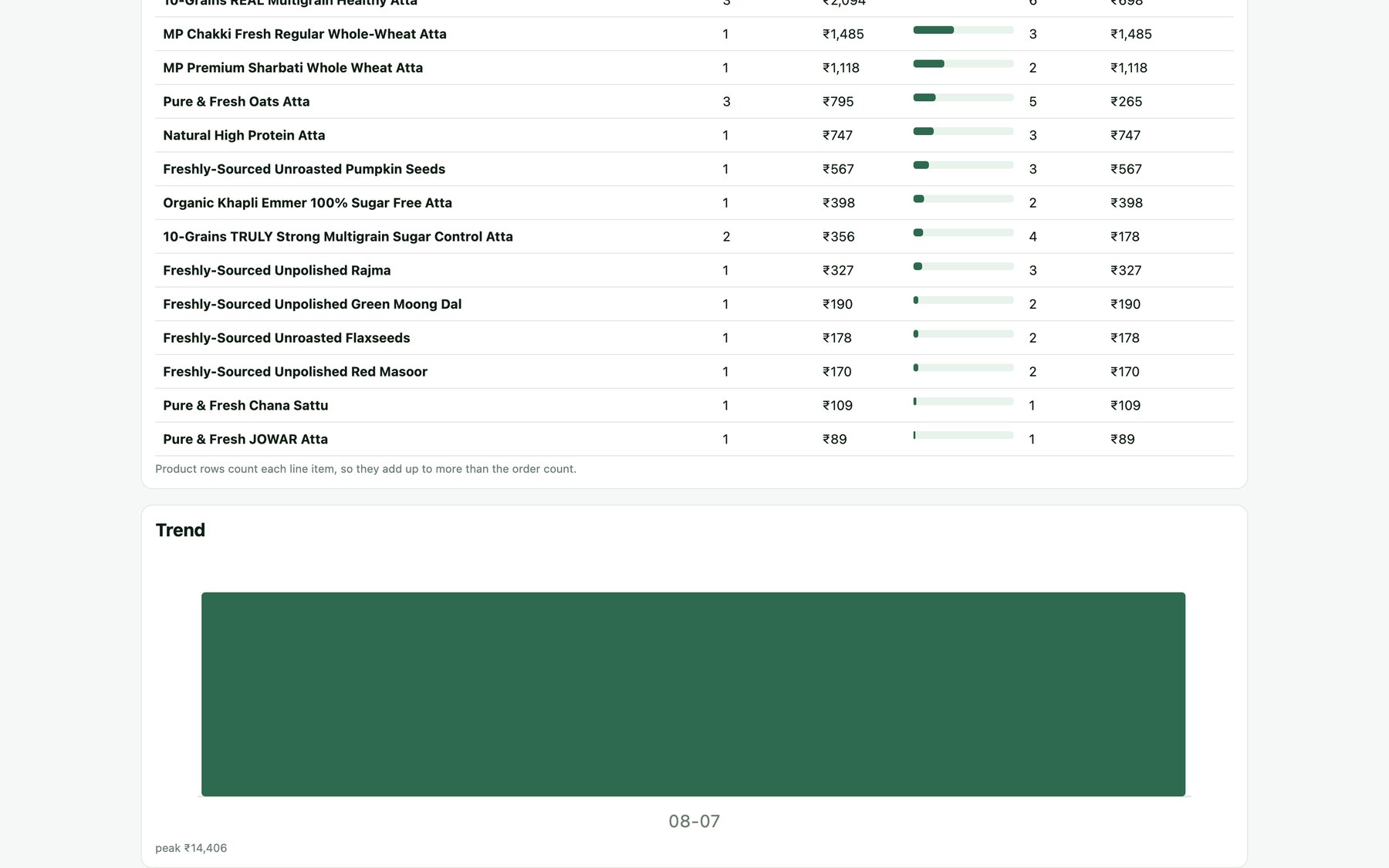
MIS — Every question the same board answers
Breakdown — Group by anything that matters
Orders — One list, every stage
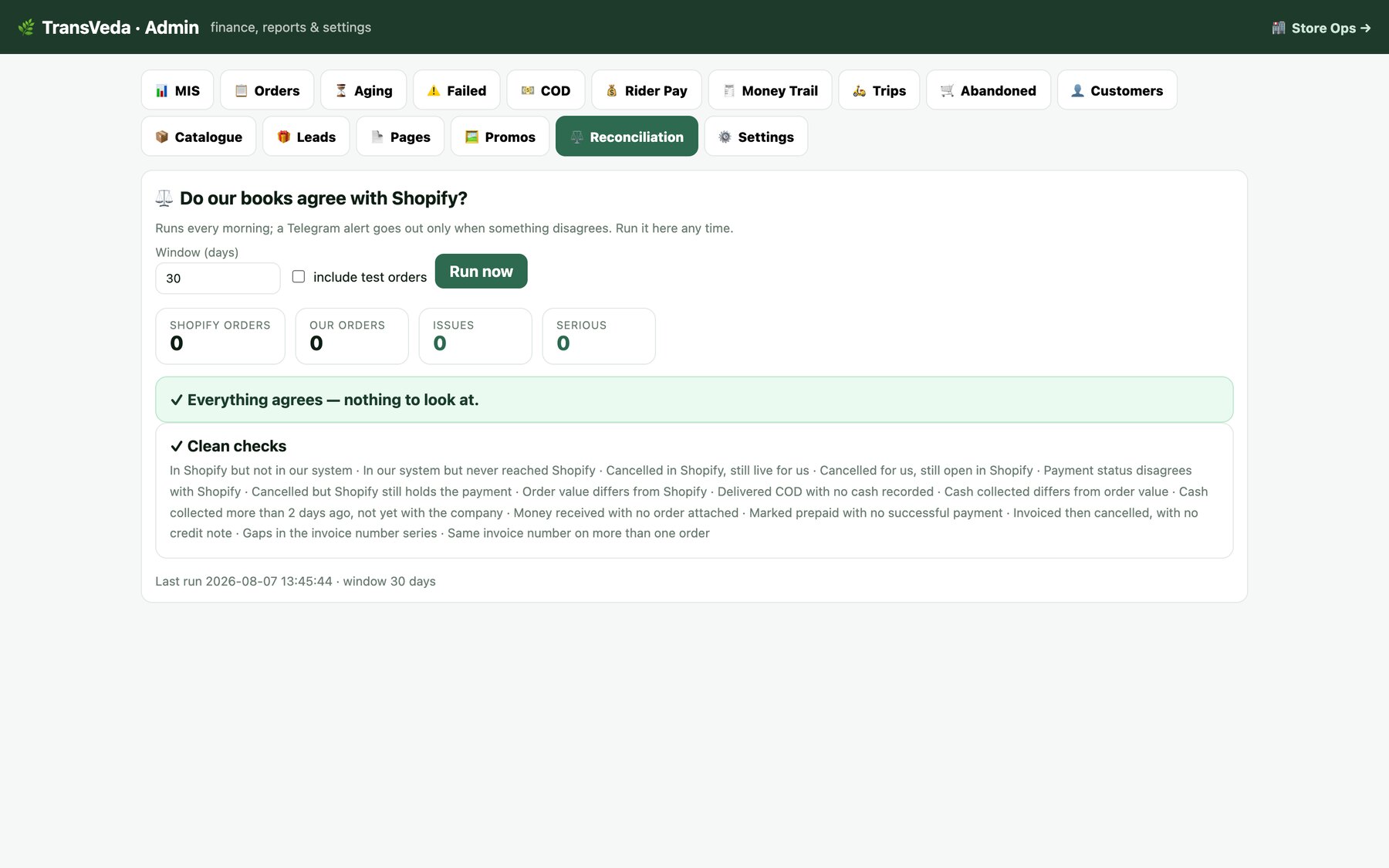
Reconciliation — Fifteen checks, every morning
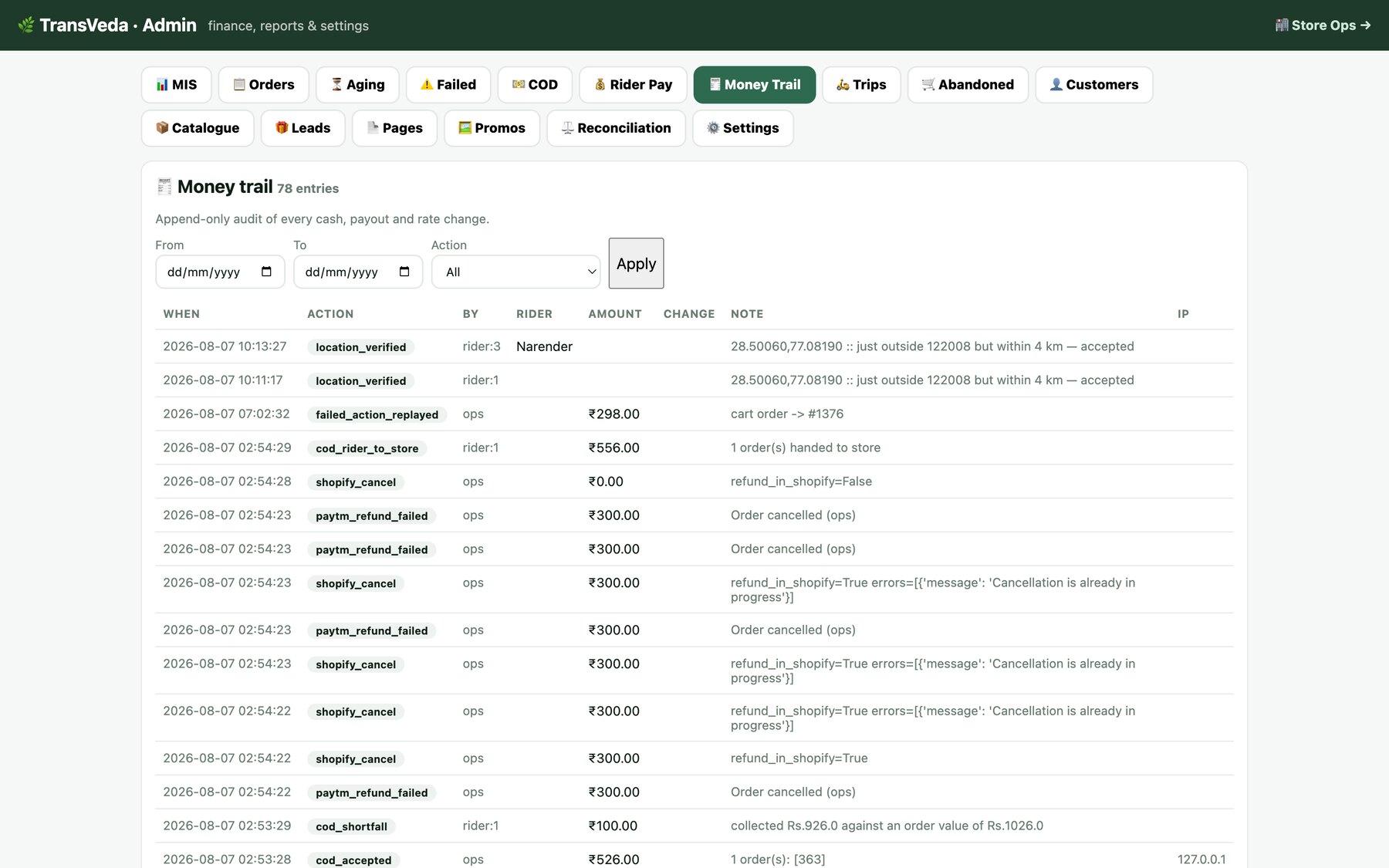
Money trail — Every rupee has a row
01 / 12
Storefront
Serviceability answered first A PIN gate, a delivery promise and a returning customer's basket.
008 The consoles — 14 seconds

Twelve screens your team lives in.

The admin console and the store-ops panel, tab by tab, on seeded data: MIS, orders, aging, rejected writes, cash custody, the money trail, reconciliation and settings — then the pick list, routing, dispatch and returns.

Admin console · store ops · 12 tabs
009 Capabilities

The details that decide whether ops runs on it.

01Serviceability gate PIN-level coverage, locality autocomplete and a delivery promise shown before the first add to cart.
02Address intelligence Location derived from the address when a customer won't share GPS, validated against their PIN, and locked once a courier confirms the door.
03Repeat ordering Past baskets, multi-select across orders, and a cadence model that flags what a household is about to run out of.
04Payments COD and gateway, with the order created only once money lands — and a one-click COD rescue when a payment fails.
05Discounts that report Codes written onto the order itself so campaign spend appears in your reports, and can never be deleted once used.
06Routing & handoff Auto-sequenced stops on real road distance, or a manifest pushed to a partner — the same states either way.
07COD custody Collected → with store → handed over → accepted, each step timestamped, shortfalls flagged the moment they happen.
08GST documents Invoices and credit notes with HSN, place of supply and composite delivery, numbered consecutively per financial year.
09Lifecycle messaging WhatsApp at every stage, with consent captured at checkout, enforced on every channel and logged for every send.
10Aging & exceptions Anything stuck past its stage limit surfaces on its own, before a customer has to call and ask.
11Returns & replacements Zero-value replacement orders with a pickup note, scheduled like any other delivery.
12MIS Sales, trends, SLAs, trips and cost per delivery — filterable and groupable eleven ways, exportable.
13Filing-ready tax reports B2C summaries by place of supply and rate, HSN-wise outward supply and credit notes tied to the invoices they reverse — exported in the shape a CA files from.
14Reports on demand, in plain English Ask for the cut you want and get a real table back — filtered, grouped and exportable — instead of raising a ticket for a new report.
15Voice ordering Hindi, Hinglish or English into a basket, resolved against the live catalogue, confirmed on one screen with the same serviceability and payment rules.
014 Rigour

Built like something that handles money.

Because it does — cash in a rider's pocket, refunds to a customer's card, and numbers a chartered accountant will read line by line.

Atomic writesIf the backend won't accept an order, the order doesn't exist here either. The customer is told, ops is alerted, the attempt can be replayed. Never a phantom order being packed against no record.
Nightly reconciliationFifteen checks each morning: orders missing on either side, payment drift, cancelled-but-not-refunded, cash that doesn't match, gaps in the invoice series. Silence means they agree.
Idempotent by designA double tap, a retried request or a duplicate payment callback produces one order and one charge. Proven under concurrent load.
Full money trailEvery refund, credit note, cash handover and shortfall recorded with actor, amount and timestamp — visible to the owner and no one else.
Consent gatesConsent captured at checkout and enforced across WhatsApp, SMS and email. Every send logged, test orders never messaged, per-number daily caps.
Tested where it mattersDispatch scenarios, concurrency and fault injection, and reconciliation proven by deliberately breaking the books and watching every check fire.
Questions

What people ask before a walkthrough.

What is a D2C ecommerce platform?

Software that lets a brand sell directly to customers — the online store and checkout — and, in a complete platform, everything after the order: shipping, delivery, cash collection, invoices and reports. D2 Commerce OS covers all of these in one system.

How is this different from a cart plus plugins?

A cart takes the order; the rest usually comes from separate apps that each hold part of the data. Here the storefront, delivery, COD, GST books and reports share one dataset, so a cancelled COD order gets its credit note and drops out of revenue without anyone re-keying it.

Is it built for Indian brands?

Yes — pincode serviceability up front, cash on delivery tracked to the bank, GST invoices with HSN and place of supply, and a rider app in English, Hinglish and Hindi.

Can we keep our existing Shopify or WooCommerce store?

Yes. Run the whole platform, or connect your current store and use only the parts you need — for example delivery, COD and GST books.

How long does it take to go live?

Our team loads your catalogue and sets up delivery zones, payments and invoicing with you. Most of the time is spent on your catalogue and pincodes, not on software.

What does it cost?

Free up to 100 orders a month, then ₹10, ₹8 or ₹6 per order by monthly volume. No per-seat fees, no annual lock-in, and cancelled orders are never billed.

The rest of the layer
Talk to us

Your store, set up free. Start with your number.

Start free.
We set it up.

Leave your number and we'll take it from there — your store, your catalogue, your delivery setup, done by our team.

  • We set up your store and move your catalogue — no charge
  • Free up to 100 orders a month, then ₹6–₹10 per order
  • Want to see it first? A walkthrough on your own products
  • No plugins to buy, no developer, no lock-in
Free setup
  1. 1Your number
  2. 2A few details optional

Takes 10 seconds · we reply within a working day

+91
We'll call or WhatsApp you once to get you started. No spam, no obligation. Privacy policy.
Chat on WhatsApp